(Você será redirecionado para outra página)
(Você será redirecionado para outra página)
It needs learn to drive and don't know where to start? So get ready because in this article we will teach you how you can do this directly from your cell phone!
Thanks to the innovation of mobile applications, today it is possible get ready for the roads and improve your driving skills without even starting the engine. Whether reviewing traffic laws, practicing mock tests or even viewing maneuvers in 3D, apps have transformed the way we approach learning to drive.
In this article, we'll talk about this growing trend, highlighting the best tools available to help you become a confident and safe driver, all within reach of a touch on the screen. Follow us in reading!
The convergence between technology and traffic education
Traffic education, traditionally dominated by practical and theoretical classes in driving schools, has undergone a significant transformation thanks to the rise of digital technology.
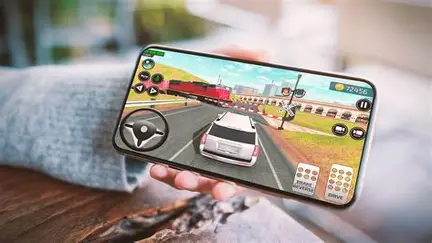
The popularization of smartphones and tablets has triggered a revolution in the way we access information. With dedicated applications, the traffic learning It is not restricted just to the physical space of the driving school.
Now, you can study traffic rules on the bus, practice simulations during your coffee break or even view complex maneuvers in 3D animations in the comfort of your home.
Technology has brought democratization in access to traffic education. With online resources, often free or at a much lower cost than traditional methods, barriers such as cost and geographic location are minimized.
Furthermore, learning becomes more flexible, allowing the user to study at their own pace and according to their routine.
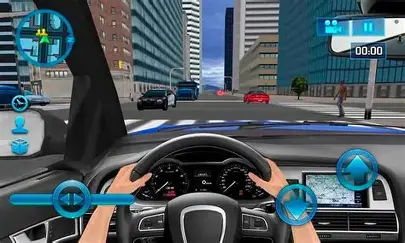
Many apps use gamification techniques to make the learning process more engaging. Through games, quizzes and challenges, users not only study, but are also encouraged to achieve better results, improving information retention.

(Você será redirecionado para outra página)
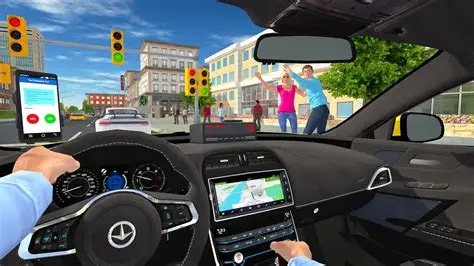
The technology of Virtual Reality (VR) and Augmented Reality (AR) is starting to be incorporated into traffic education. Using VR headsets, for example, students can experience traffic situations in a controlled and safe environment, better preparing themselves for real challenges on the road.
How to study theory through applications
Before downloading any app, read reviews and check the rating. Choice recommended apps by trusted institutions or that have good reviews from other users.
Choose apps that offer quizzes and tests simulated. Testing your knowledge regularly helps with information retention and identifies areas that need more attention.
Like any other form of studying, consistency is key. Establish a daily or weekly time to review content. The advantage of apps is that you can study anywhere, whether during a break at work, on public transport or before bed.
Many apps offer graphics, animations and videos to explain complex concepts, such as overtaking rules or how different systems in a car work. These visual resources can help you better understand and remember the content.
Traffic laws and regulations may change. Keep your app updated to ensure you are studying the latest information.
Some apps offer forums or community sections where users can ask questions and share tips. Participating in these communities can enrich your learning process.
Although apps are a powerful tool, it is always a good idea to complement your study with other sources, such as books, official websites and in-person theoretical classes.
Traffic theory study apps are a modern, interactive and flexible way to prepare for exams. However, like any tool, it is essential know how to use them effectively. By following these tips, you'll be on your way to mastering the theoretical content and feeling confident on your test day.